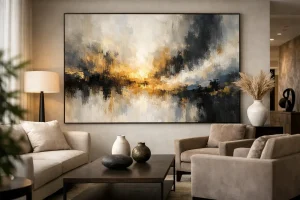
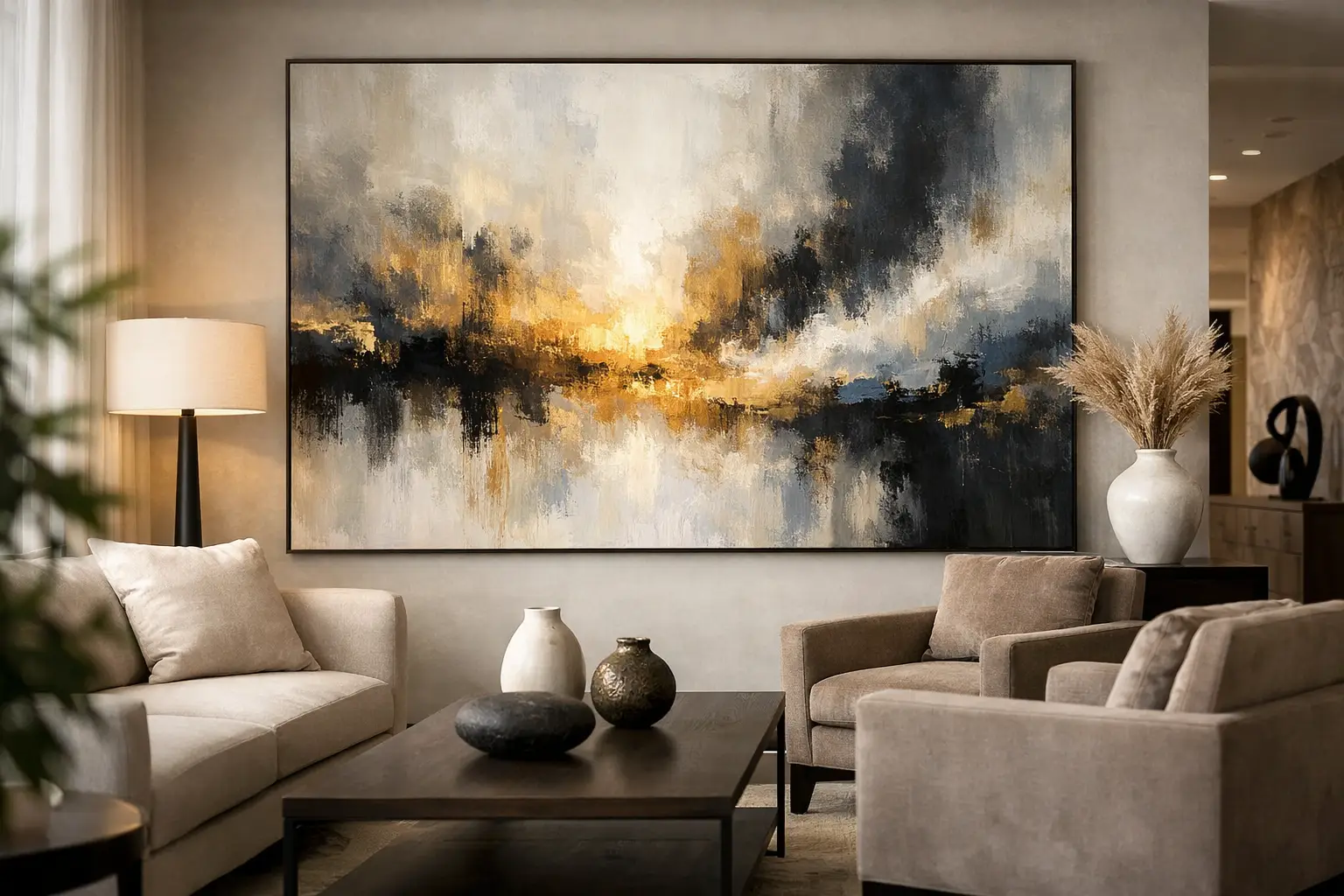
A memorable room rarely begins with a matching set. It begins with one decision that shifts the atmosphere: a work of art that changes how the space is felt. The most compelling art commissions do more than fill an empty wall. They establish scale, introduce a point of view, and give an interior a visual force that cannot be replicated from a showroom floor.
For collectors who value originality, commissioning art is an opportunity to acquire more than an object. It is a chance to bring a specific idea into physical form – one made for the architecture, the light, and the life happening around it. For a light sculpture or infinity mirror work, that collaboration can turn a residential wall, gallery passage, or entryway into a dimensional experience.
What Art Commissions Make Possible
A commission is not simply a request for a different size or color. At its best, it is a conversation between the collector’s space and the artist’s visual language. The result should feel inevitable in the room while remaining unmistakably authored.
That distinction matters. Mass-produced decor is designed to offend no one and fit almost anywhere. A commissioned work has the freedom to be specific. It can answer the proportions of a double-height foyer, echo the geometry of a staircase, hold its own against monumental furniture, or bring a quiet, controlled glow to a minimal bedroom.
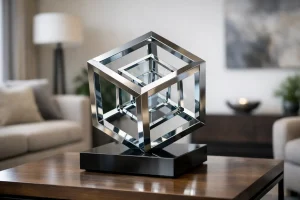
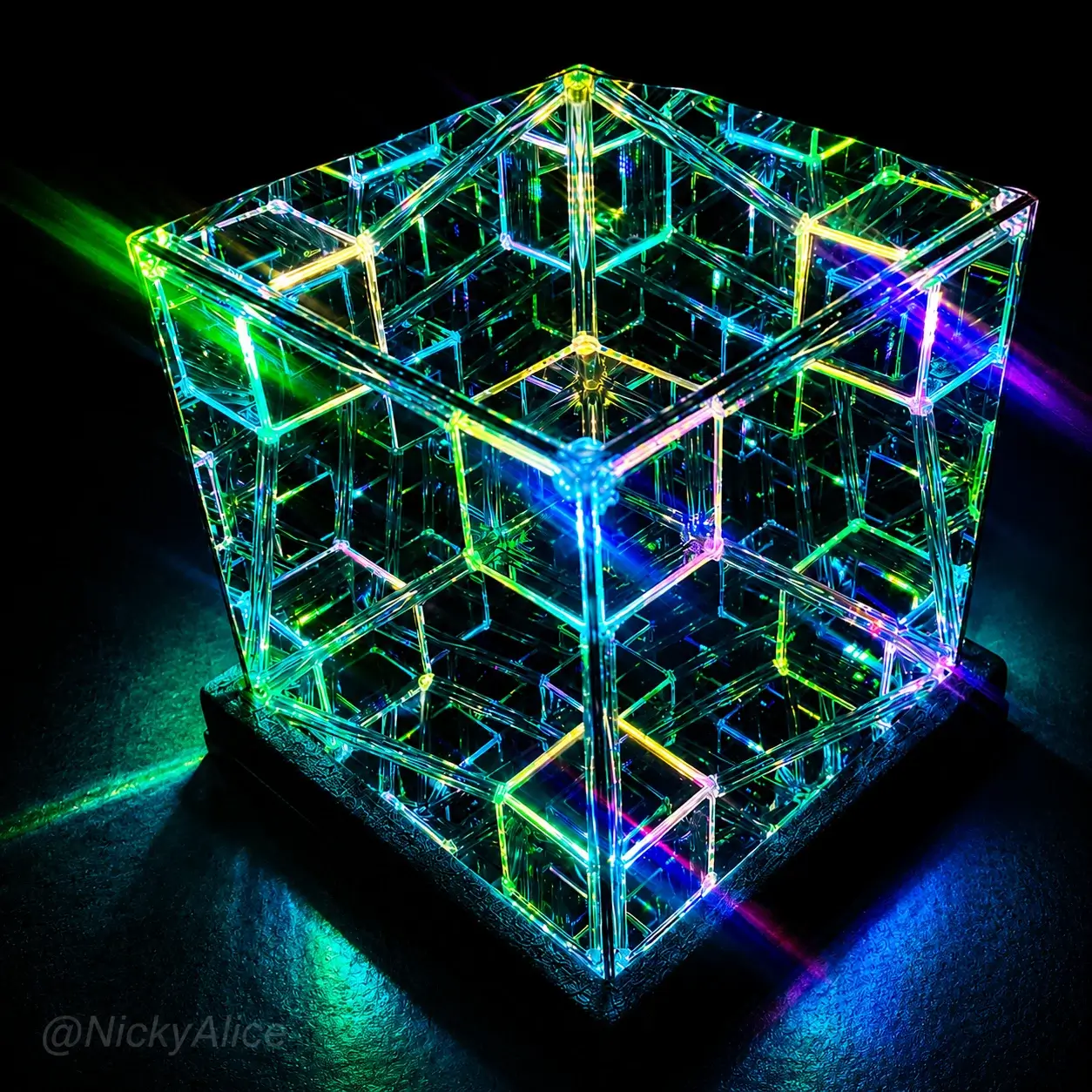
With hyper-dimensional sculpture, specificity extends beyond physical dimensions. A Tesseract or hypercube-inspired infinity mirror can be designed around viewing distance, wall placement, ceiling height, available power, and the mood a collector wants to create after dark. The work may read as a precise sculptural object in daylight, then open into an impossible field of depth once illuminated.
This is where a custom artwork becomes experiential. Light is no longer an accessory. It is part of the composition, changing the perceived boundaries of the piece and shaping the energy of the entire room.
Start With the Space, Not a Screenshot
A reference image can be useful, but it should not become a set of instructions. The strongest commissions start with the environment where the work will live. Before choosing a form, consider what the piece needs to accomplish.
Is it meant to command attention from across a great room? Draw guests toward the end of a corridor? Create a contemplative focal point in a private office? A sculpture intended for a dramatic first impression needs a different scale and light presence than one designed for close viewing beside a lounge chair.
Photographs, wall measurements, ceiling heights, and a sense of surrounding finishes give an artist far more useful information than a trend board alone. Stone, dark wood, plaster, glass, polished metal, and saturated paint all affect how reflective surfaces and programmable LEDs are perceived. A deep black frame may create a sharper portal effect against a pale wall, while a lighter or metallic presence can connect the work to an architectural finish.
There is also a practical question: should the commission harmonize with the room or interrupt it? Neither answer is universally right. A restrained interior may benefit from an electric, futuristic rupture. In a maximalist setting, a work with disciplined geometry can provide a moment of order. The aim is not to match every surface. It is to create tension with intention.
Scale Is an Emotional Decision
Clients often approach sizing as a technical detail, then discover it is the most consequential creative choice. A work that is too small can disappear into an expansive wall. One that is oversized without enough breathing room may feel compressed rather than monumental.
Think about scale in relation to the first viewing position. A piece seen from the front door needs enough visual authority to register at distance. A work installed in a library or office can reward closer inspection, allowing subtle dimensional layers and light choreography to emerge gradually.
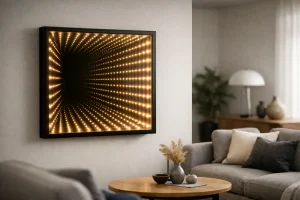
For a sculptural infinity mirror, depth matters as much as width and height. The viewer is not looking at a flat image. They are encountering an optical architecture that appears to extend beyond the wall. This makes placement especially important. Give the work a clear sightline and enough surrounding negative space for its illusion to expand.
Define the Experience You Want After Dark
A commissioned light work should not be judged only when switched off. Ask how it should behave at night, during a dinner party, in a morning routine, or when the room is quiet and nearly empty.
Advanced programmable LED lighting offers a wide range of possibilities, from a focused monochromatic glow to evolving color sequences controlled from a smartphone. That flexibility is powerful, but it benefits from restraint. More effects do not automatically create more impact. A sophisticated program may be slow, meditative, and nearly imperceptible, allowing the geometry to remain central. A more kinetic program may be exactly right for a media room, creative studio, or social space built around energy and surprise.
Color deserves the same level of thought. Warm tones can bring a sculptural intimacy to wood, bronze, and earth-toned interiors. Cooler colors can heighten the work’s architectural precision and futuristic character. Saturated color may become the room’s signature after sunset. The right approach depends on whether the collector wants the sculpture to support the existing interior palette or create a new visual language within it.
Power planning should happen early. Hardwired, plug-in, and battery-conscious options each involve trade-offs related to placement, installation complexity, and long-term use. A clean installation is part of the finished artwork. Planning for cable management and access before fabrication protects the final effect.
The Commission Process Should Protect the Vision
Custom work requires trust, but it should never require guesswork. A clear commission process gives the collector room to make meaningful decisions while preserving the integrity of the artist’s practice.
Early discussions usually establish the intended location, dimensions, visual direction, lighting preferences, materials, and installation requirements. From there, the artist can determine what will genuinely work structurally and aesthetically. This is not a limitation. It is the value of commissioning a specialist rather than ordering a modified product.
A dimensional light sculpture involves fabrication choices that are inseparable from its final presence: mirror quality, frame construction, layered geometry, LED configuration, diffusion, finish, and the way the piece is engineered to mount securely. A work made by hand carries decisions that cannot be captured in a dropdown menu.
Collectors should also expect a realistic lead time. Original fabrication takes longer than shipping inventory because the piece does not exist until the artist builds it. That time covers design refinement, sourcing, construction, lighting integration, testing, finishing, and careful preparation for delivery or installation. If the project is tied to a renovation, opening, or move-in date, begin the conversation well before the final furnishing stage.
Pricing follows the same logic. Size is part of the equation, but it is not the whole equation. Complexity of geometry, custom lighting behavior, materials, power configuration, and installation needs can all affect the investment. Flexible payment structures or financing may make sense for a larger work, especially when it functions as the defining element of a significant interior project.
Originality Should Be Documented
For serious collectors, provenance is not a formality. It is part of what distinguishes a collectible artwork from a decorative imitation. A signed and numbered limited edition or a one-of-one commission should come with clear documentation, including a certificate of authenticity and details that establish the work’s place within the artist’s body of work.
This is particularly relevant for conceptually distinct pieces. A hypercube-inspired sculpture is more than a stylish arrangement of lights and mirrors. Its power comes from the artist’s relationship to dimensional perception, mathematics, sacred geometry, and the physical craft required to make those ideas visible. Originality lives in that synthesis.
Nicky Alice approaches custom Tesseract works as sculptural environments in miniature: objects with a physical edge, a luminous interior, and an apparent depth that resists easy explanation. The strongest commission does not imitate a trend. It gives the collector a work that still feels ahead of the room around it.
Bring a Clear Brief, Then Leave Room for Surprise
A useful brief communicates the nonnegotiables: the wall dimensions, intended placement, installation constraints, preferred palette, budget range, and desired delivery window. It also names the feeling the work should create. Words such as meditative, cinematic, architectural, otherworldly, and electric can be more revealing than a stack of reference images.
Just as important is the willingness to let the artist lead where their expertise is strongest. A collector may know the space intimately, while the artist knows how light will behave inside a layered mirror structure, how a particular proportion will read from ten feet away, and where technical limits protect the work’s longevity. The most successful collaborations make room for both forms of knowledge.
Commissioning art is an act of discernment. Choose the work that does not merely complete the room, but changes what the room is capable of becoming.